
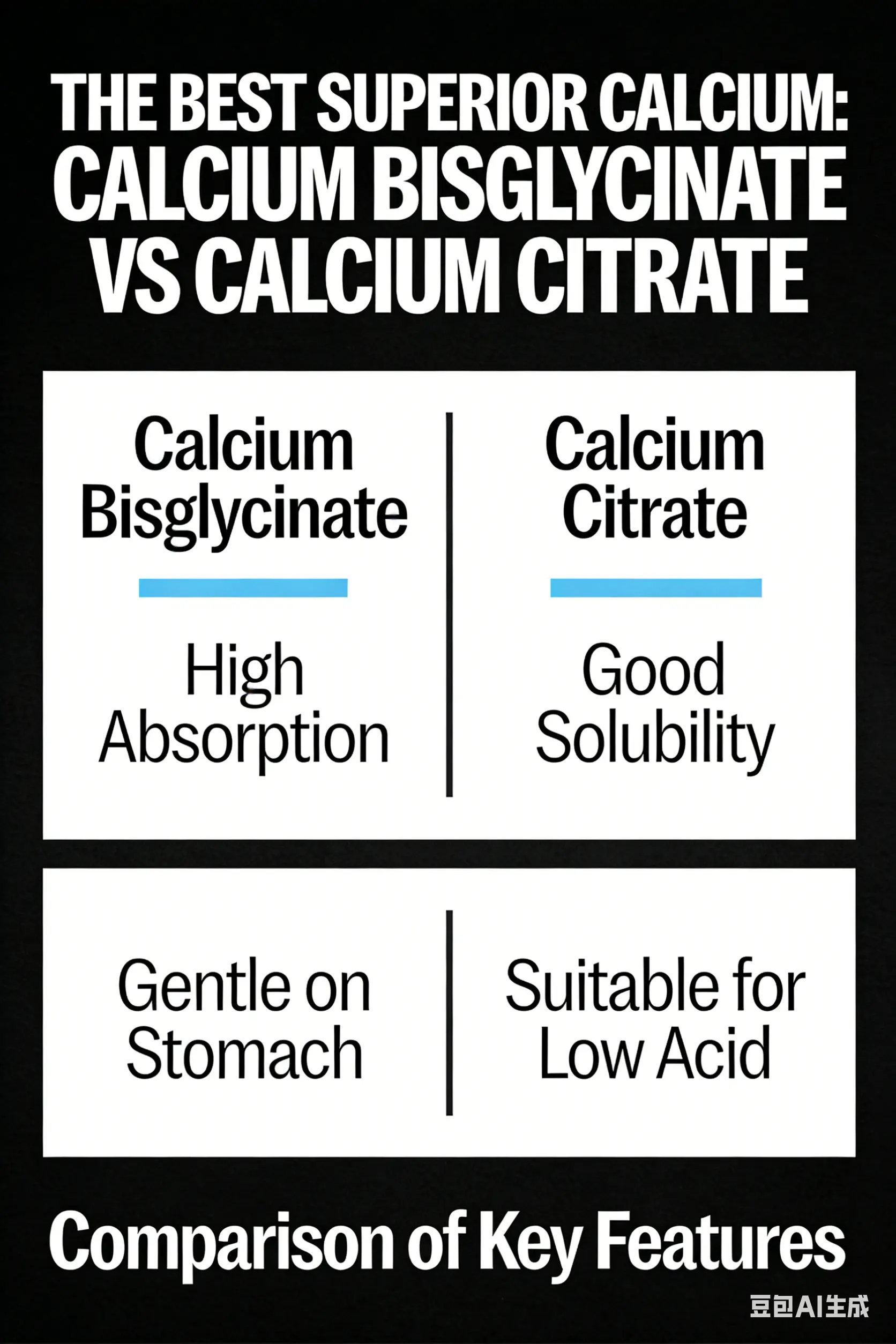
Calcium Bisglycinate is the third generation Calcium supplement, and It primarily mimics the process by which human cells absorb calcium, and its pH level is moderate, minimizing the consumption of stomach acid, making it a new generation of calcium supplement.and if you want to know more about how it work in our body, pls refer to the page”what is the main use of Calcium Bisglycinate“
Unlike the compound drug “glycine calcium carbonate” (used mainly for acid neutralization), “glycine calcium chelate” is a dietary supplement specifically designed for calcium supplementation. and if you want to know the main calcium supplements that we have, and you can click here to know more.
The core comparison between the two is as follows:
| Feature | Calcium bisglycinate Chelate | Calcium Citrate |
|---|---|---|
| Chemical Nature | Amino acid chelated calcium. Calcium ions are bound to two glycine molecules via chelation technology. | Organic calcium salt. Calcium combined with citric acid. |
| Absorption Characteristic | Mimics the body’s natural absorption pathway, absorbed as an intact molecule in the small intestine. | Absorption does not require stomach acid; good water solubility, gentle on the gastrointestinal tract. |
| Elemental Calcium Content | Relatively high (among organic calcium types). | Relatively low (approximately 21%). |
| Main Advantages | 1. Theoretically high absorption and utilization rate. 2. Gentle on the stomach and intestines. | 1. Absorption is independent of stomach acid, making it suitable for individuals with low stomach acid (e.g., elderly, gastritis patients). 2. Helps reduce the risk of kidney stones. 3. Available in various forms (tablets, effervescent tablets, etc.). |
| Suitable For | Individuals seeking high absorption rates and minimal gastrointestinal discomfort. | Individuals with poor gastric function (elderly, those with low stomach acid, or on acid-suppressing medication), those at risk for kidney stones. |
| Considerations | Quality and price can vary significantly as a dietary supplement. | A larger dosage may be required to achieve the same calcium intake. |
🧐 How to Choose?
You can decide based on your specific situation:
- Prioritize Stomach Comfort and Safety: If you are elderly, have insufficient stomach acid (e.g., atrophic gastritis), or are taking acid-suppressing medication, calcium citrate is a more reliable choice. It also has positive implications for kidney stone risk.
- Pursue High Absorption and Gentleness: If your gastrointestinal function is normal but you desire a calcium supplement with potentially higher theoretical absorption efficiency and gentler effects, you may consider a glycine calcium chelate product from a reputable brand.
- Consider Cost-Effectiveness: Typically, calcium citrate has a more mature production process, offering generally better value for money and wider applicability. High-quality glycine calcium chelate products may be more expensive.
💡 Core Calcium Supplementation Advice
Regardless of your choice, please note:
- Dosage and Timing: Take no more than 500 mg of elemental calcium per dose. Dividing the dose (e.g., morning and evening) improves absorption.
- Combine with Vitamin D: Supplementing with Vitamin D significantly enhances calcium absorption and utilization.
- Avoid Over-Supplementation: Long-term excessive calcium intake (especially exceeding 2000 mg per day) may increase the risk of kidney stones and vascular calcification.
- Prioritize Dietary Sources: Dairy products, soy products, and dark green leafy vegetables are the preferred sources of calcium.

If you can share your age, primary reason for supplementation (e.g., osteoporosis prevention), and any history of stomach/kidney issues or current medications, I can provide more tailored analysis.
