
Interested in our CHONDROITIN SULFATE? Fill out the form below to request a quote, sample, or additional technical information.
Pharmaceutical-Grade Chondroitin Sulfate: Best Chondroitin Sulfate Supplier for Joint Health, Skincare & Clinical Applications

Chondroitin Sulfate: Nature’s Building Block for Connective Tissues
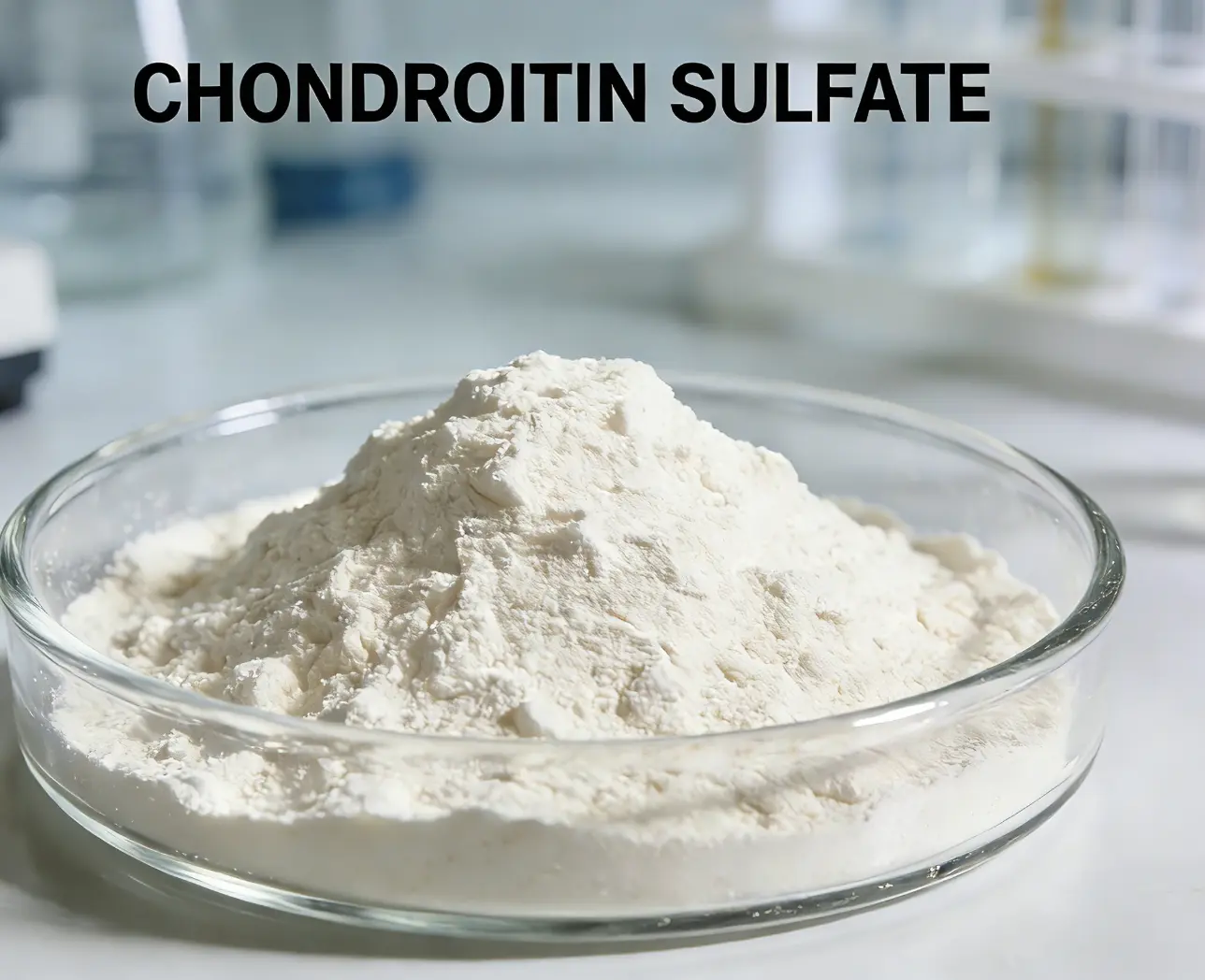
Chondroitin Sulfate is a naturally occurring glycosaminoglycan (GAG) that serves as a crucial structural component of cartilage, tendons, ligaments, and connective tissues throughout the body. As a leading best chondroitin sulfate supplier, we provide pharmaceutical-grade Chondroitin Sulfate derived from sustainable, traceable sources with molecular weights optimized for maximum bioavailability and therapeutic efficacy. This vital biomolecule attracts and retains water within cartilage matrix, providing cushioning, shock absorption, and structural integrity to joints while inhibiting cartilage-degrading enzymes.
Our high-purity chondroitin sulfate powder is meticulously processed to preserve the natural molecular structure and sulfation patterns essential for biological activity. Unlike inferior products that may contain mixed GAGs or degraded molecules, our Chondroitin Sulfate maintains optimal chain length and sulfation at the C-4 and/or C-6 positions of N-acetylgalactosamine residues, ensuring maximum receptor binding and biological functionality in human tissues.
- Product Name: Chondroitin Sulfate Sodium
- Source: Bovine trachea, Porcine cartilage, or Shark cartilage (specify)
- CAS No.: 9007-28-7
- Appearance: White to off-white fine powder
- Purity (as CS): ≥ 95.0%
- Molecular Weight: 10,000 – 50,000 Da (customizable)
- Sulfate Content: ≥ 20.0%
- Protein Content: ≤ 6.0%
- pH (1% solution): 5.5-7.5
Download the complete technical specification sheet for detailed quality parameters and analytical methods.
Download Specification from best chondroitin sulfate supplier
Technical Specifications & Quality Standards: Best Chondroitin Sulfate Manufacture Excellence
As a premier best chondroitin sulfate manufacture, our quality control protocol encompasses every stage from raw material sourcing through extraction, purification, and standardization. The following comprehensive specification table details the exacting standards that define our pharmaceutical-grade Chondroitin Sulfate, suitable for the most demanding applications in dietary supplements, functional foods, and clinical formulations.
| Test Parameter/Item | Specification Standard | Test Method | Significance/Notes |
|---|---|---|---|
| Identification (IR/HPLC) | Conforms to USP/EP reference standard | FTIR Spectroscopy/HPLC | Confirms molecular identity and structure |
| Assay (Chondroitin Sulfate Content) | ≥ 95.0% | CPC Titration/HPLC | Primary potency measurement |
| Appearance | White to off-white powder | Visual inspection | Visual quality indicator |
| Sulfate Content (as SO₄) | ≥ 20.0% | Ion Chromatography | Crucial for biological activity |
| Protein Content | ≤ 6.0% | Lowry/Bradford Method | Purity indicator; lower = more purified |
| Molecular Weight Distribution | 10,000 – 50,000 Da | GPC/HPLC | Optimal range for bioavailability |
| pH (1% aqueous solution) | 5.5 – 7.5 | Potentiometric | Acidity/alkalinity balance |
| Loss on Drying | ≤ 10.0% (105°C, 3h) | Gravimetric | Moisture content measurement |
| Residue on Ignition | 20.0% – 30.0% | Gravimetric (800°C) | Consistent with sulfate content |
| Heavy Metals (as Pb) | ≤ 20 mg/kg | ICP-MS | Toxic metal contamination limit |
| Arsenic (As) | ≤ 2 mg/kg | ICP-MS | Toxic element limit |
| Microbiological Quality | Total aerobic count ≤ 1000 cfu/g Yeast & Mold ≤ 100 cfu/g E. coli: Absent in 1g Salmonella: Absent in 10g | USP <61>, <62> | Microbiological safety parameters |
| Specific Rotation [α]²⁰D | -20° to -30° (c=10 in water) | Polarimetry | Confirms stereochemical structure |
| Viscosity (1% solution at 25°C) | 5 – 15 mPa·s | Rotational Viscometer | Molecular integrity indicator |
| Particle Size Distribution | 90% ≤ 150μm | Laser diffraction | Consistent powder characteristics |
| Solubility in Water | ≥ 20g/100mL | Gravimetric | Important for formulation versatility |
Our commitment as a wholesale chondroitin sulfate supplier extends beyond basic compliance. Each production batch undergoes approximately 45 separate quality control checks before release, ensuring unprecedented consistency and reliability for your formulations. All shipments are accompanied by a comprehensive Certificate of Analysis (CoA) that documents compliance with these exacting standards, along with supporting stability data and method validation reports upon request.
The manufacturing process utilizes advanced enzymatic extraction and membrane purification technologies that preserve the natural molecular structure while removing impurities, proteins, and unwanted GAGs. Our state-of-the-art facilities operate under cGMP (current Good Manufacturing Practice) guidelines, with dedicated production lines for glycosaminoglycans to prevent cross-contamination. Regular third-party audits and analytical verification ensure our internal quality systems meet or exceed international standards including USP, EP, JP, FCC, and FSSC 22000. For comprehensive insights into how chondroitin sulfate and other ingredients support bone and joint health, read our detailed analysis report on the science behind connective tissue nutrition.
Comprehensive Applications of Chondroitin Sulfate: From Joint Health to Skincare Innovations
Chondroitin Sulfate serves as a versatile bioactive glycosaminoglycan with scientifically supported benefits across multiple health and wellness categories. As a specialized best chondroitin sulfate chelate food grade supplier, we provide technical guidance for optimal incorporation into your product matrix while maximizing bioavailability, stability, and therapeutic efficacy. The following detailed application analysis covers the primary utilization categories with specific formulation recommendations.
Joint Health & Osteoarthritis Management
Chondroitin Sulfate is most renowned for its role in supporting joint health and managing osteoarthritis symptoms through multiple mechanisms including cartilage protection, anti-inflammatory effects, and stimulation of synovial fluid production.
- Osteoarthritis Supplements: Often combined with glucosamine, MSM, hyaluronic acid, and curcumin for comprehensive joint support. Clinical studies demonstrate significant pain reduction and functional improvement with daily doses of 800-1200mg.
- Sports Joint Support: Formulated for athletes and active individuals, combined with collagen peptides, turmeric, boswellia, and vitamin C for exercise-induced joint stress.
- Age-Related Joint Care: Specifically designed for older adults experiencing age-related cartilage degeneration, often enhanced with vitamin D, calcium, and vitamin K2.
- Rheumatoid Arthritis Support: Adjunctive support in autoimmune joint conditions, typically combined with omega-3s, ginger, and anti-inflammatory nutrients.
Joint Health Dosage: 800-1200mg daily in divided doses. Clinical effects typically observed after 2-4 months of consistent use. For optimal absorption, combine with meals. The combination of chondroitin sulfate and glucosamine demonstrates synergistic effects in clinical trials.
Bone and Cartilage Repair
Beyond symptomatic relief, Chondroitin Sulfate actively supports cartilage and bone repair processes by providing essential building blocks for extracellular matrix synthesis and modulating cellular activity in connective tissues.
- Cartilage Regeneration Formulas: Combined with type II collagen, hyaluronic acid, silicon, and growth factor-stimulating nutrients for comprehensive cartilage support.
- Bone Fracture Healing: Incorporated into bone healing protocols alongside calcium, magnesium, vitamin D3, vitamin K2, and strontium for accelerated fracture repair.
- Post-Surgical Recovery: Essential in orthopedic surgery recovery formulas, particularly following cartilage repair procedures like microfracture or mosaicplasty.
- Osteoporosis Support: Adjunctive support in bone density formulations, working synergistically with mineral and vitamin cofactors.
Bone & Cartilage Repair: 1000-1500mg daily during active repair phases. For post-surgical recovery, continue for 3-6 months minimum. Combine with 1000-2000mg vitamin C daily for collagen synthesis support.
Dietary Supplements & Functional Foods
Chondroitin Sulfate is increasingly incorporated into diverse dietary supplements and functional foods targeting connective tissue health, mobility, and active aging across various consumer segments.
- Senior Nutrition Products: Formulated into specialized senior nutrition products addressing mobility, joint comfort, and quality of life in aging populations.
- Active Lifestyle Formulas: Incorporated into products for physically active consumers including weekend warriors, recreational athletes, and fitness enthusiasts.
- Functional Beverages: Soluble forms of chondroitin sulfate suitable for joint health beverages, shakes, and ready-to-drink formulations.
- Gummy & Chewable Formats: Popular delivery form for joint health supplements, requiring specific formulation expertise for stability and palatability.
Supplement Formulation: For capsules/tablets, standard dose is 400mg per unit (2-3 daily). For beverages, 200-400mg per serving. Consider enteric coating for gastric protection if needed.
Specialized Clinical & Therapeutic Applications
As a specialized best chondroitin sulfate chelate food grade manufacture, we provide technical support for advanced clinical applications that leverage Chondroitin Sulfate’s unique therapeutic properties beyond traditional joint health.
Ophthalmology Applications
Chondroitin Sulfate plays crucial roles in ocular health as a component of corneal stroma and vitreous humor, with specific applications in eye care formulations and surgical procedures.
- Dry Eye Formulations: Incorporated into artificial tears and ocular lubricants for its water-retention and mucoadhesive properties, often combined with sodium hyaluronate.
- Cataract Surgery: Used as a viscoelastic protective agent during cataract extraction and intraocular lens implantation procedures.
- Corneal Protection: Formulated in ocular wound healing preparations and protective solutions for contact lens wearers.
- Ocular Surface Disorders: Therapeutic component in formulations for conditions like keratoconjunctivitis sicca and other ocular surface diseases.
Ophthalmic Applications: Typically 0.1-0.5% concentration in topical formulations. For viscoelastic surgical applications, higher concentrations (1-3%) with specific viscosity profiles are required. Sterility and endotoxin control are critical.
Skincare & Cosmeceutical Innovations
The water-retention, matrix support, and anti-inflammatory properties of Chondroitin Sulfate make it valuable in advanced skincare formulations targeting hydration, anti-aging, and barrier function.
- Anti-Aging Serums & Creams: Combined with hyaluronic acid, peptides, vitamin C, and retinol for comprehensive skin matrix support and hydration.
- Barrier Repair Formulations: Essential in products targeting compromised skin barrier function, often with ceramides, cholesterol, and fatty acids.
- Post-Procedure Skincare: Used in formulations following chemical peels, laser treatments, and microneedling to support healing and reduce inflammation.
- Wound Healing Topicals: Incorporated into advanced wound care formulations for its role in extracellular matrix support and tissue regeneration.
Skincare Formulations: 0.5-2.0% in finished products. For serums, 1-2% concentration shows optimal efficacy. Always conduct compatibility testing with other active ingredients and preservative systems.
Pet Health & Veterinary Applications
Chondroitin Sulfate is extensively used in veterinary medicine, particularly for aging pets and large breed dogs prone to joint issues, with formulations tailored to species-specific needs.
- Canine Joint Health: Formulated with glucosamine, MSM, and green-lipped mussel for canine osteoarthritis and hip dysplasia support.
- Equine Applications: High-dose formulations for performance horses and aging equines experiencing joint stress and degeneration.
- Feline Mobility Support: Specially formulated for older cats experiencing reduced mobility and joint stiffness.
- Veterinary Nutraceuticals: Critical component of veterinary-recommended joint support products with established dosing protocols.
Veterinary Dosages: Canine: 50-100mg/kg body weight daily. Equine: 5-10g daily for maintenance, 10-20g for therapeutic support. Feline: 100-200mg daily. Always follow veterinary guidance for specific conditions.
Formulation Considerations & Compatibility
Successful incorporation of Chondroitin Sulfate into product formulations requires attention to several technical factors:
- Solubility Profile: Chondroitin Sulfate exhibits excellent water solubility (≥20g/100mL), forming viscous solutions at higher concentrations. Solubility decreases with increasing molecular weight. For high-concentration liquid formulations, consider controlled hydration techniques.
- pH Stability: Stable across pH range 4.0-8.0. Outside this range, especially under acidic conditions (pH < 3), may experience desulfation or chain cleavage. Optimal formulation pH is 5.5-7.0.
- Thermal Stability: Moderate heat stability; avoid prolonged exposure to temperatures above 80°C. For heat-processed products, consider post-processing addition or use of stabilized forms.
- Compatibility with Other Ingredients: Generally compatible with most supplement and cosmetic ingredients. May form complexes with cationic compounds. Compatible with glucosamine, MSM, hyaluronic acid, collagen, and most vitamins/minerals.
- Viscosity Considerations: Solutions exhibit significant viscosity even at low concentrations (1-2%). This property is valuable in certain applications (eye drops, topical gels) but may require formulation adjustments in oral liquids.
- Bioavailability Considerations: Molecular weight significantly affects absorption. Lower molecular weight fractions (10,000-20,000 Da) demonstrate superior oral bioavailability compared to higher molecular weight forms. For enhanced absorption, consider optimized molecular weight profiles.
- Storage Stability: When stored in original sealed containers at controlled room temperature (15-25°C) and low humidity (<60% RH), Chondroitin Sulfate maintains stability for at least 36 months. Protect from excessive moisture as it is hygroscopic.
Understanding the comparative advantages of different joint health ingredients is essential for effective formulation. While chondroitin sulfate vs glucosamine comparisons often focus on their individual merits, the most compelling scientific evidence supports their combined use for synergistic effects in joint health applications.
Packaging, Storage & Global Logistics Solutions
As a reliable wholesale chondroitin sulfate chelate food grade supplier serving global markets, we offer flexible, secure packaging solutions designed to maintain product integrity throughout the supply chain while meeting international shipping and regulatory requirements.
Standard Packaging Configuration
- Primary Packaging: Double-layer polyethylene bags with aluminum foil inner liner (0.1mm thickness) providing excellent moisture barrier properties essential for this hygroscopic ingredient. Each bag includes desiccant packet to maintain optimal powder characteristics.
- Secondary Packaging: Food-grade fiberboard drum (25 kg net weight) or HDPE plastic drum with airtight sealing mechanism. Outer drum labeled with complete product information, handling instructions, and regulatory compliance statements including source declaration.
- Labeling: Compliant with international regulations including product name, source material, CAS number, batch number, manufacturing date, expiry date, storage conditions, net weight, and allergen statements. Custom labeling available to meet specific country requirements.
- Palletization: Standard configuration: 16 drums per pallet (400 kg net weight), stretch-wrapped with corner protectors for secure transport. Euro pallets or standard pallets available based on destination requirements.
Custom & Small-Quantity Packaging
Understanding that different customers have varying requirements, we offer multiple alternative packaging options:
- Small Quantity Options: 1 kg aluminum foil bags, 5 kg HDPE containers, or 10 kg cartons for R&D samples, clinical trials, and small production runs.
- Bulk Packaging: For large-volume customers, 500 kg or 1000 kg flexible intermediate bulk containers (FIBCs) with appropriate liners are available, offering significant cost savings for high-volume users.
- Custom Branding: Private label packaging with your company branding, logos, and customized labeling information compliant with your market regulations.
- Documentation Package: Each shipment includes Certificate of Analysis, Material Safety Data Sheet (MSDS), Certificate of Origin, Commercial Invoice, Packing List, GMP Certificate, and Source Declaration. Additional documentation (Stability Data, Allergen Statement, TSE/BSE Statement) available upon request.
Storage & Handling Guidelines
- Optimal Storage Conditions: Store in a cool, dry, well-ventilated area away from direct sunlight. Maintain temperature between 15-25°C and relative humidity below 60%. Due to hygroscopic nature, strict humidity control is essential.
- Shelf Life: 36 months from date of manufacture when stored under recommended conditions in original unopened packaging.
- Re-Opened Containers: After opening, reseal immediately and use contents promptly. For partially used containers, transfer remaining material to airtight containers with desiccant to prevent moisture absorption and caking.
- Handling Precautions: Use appropriate personal protective equipment (dust mask, gloves, safety glasses) when handling powder to minimize dust inhalation and contact. Ensure adequate ventilation in handling areas.
- Transportation: Classified as non-hazardous for transport by air, sea, or land. No special shipping requirements under normal conditions.
Global Logistics Support
With extensive experience in international glycosaminoglycan distribution, we provide comprehensive logistics solutions:
- Shipping Options: FOB, CIF, CFR, DAP, DDP based on your preference and incoterms understanding. We provide guidance on the most cost-effective and efficient shipping methods for your location.
- Primary Routes: Regular container shipments from major Chinese ports (Shanghai, Ningbo, Shenzhen) to destinations worldwide, with established relationships with major shipping lines for reliable transit times.
- Documentation Expertise: Experienced in documentation requirements for major markets (EU, USA, Canada, Australia, Japan, Southeast Asia, South America), including specific requirements for animal-derived ingredients. We ensure all paperwork is complete and accurate to prevent customs delays.
- Temperature/Humidity Control: Climate-controlled logistics available for customers requiring strict temperature and humidity maintenance during transit, particularly important for hygroscopic ingredients.
- Tracking & Communication: Real-time shipment tracking and proactive notification of any transit issues or delays. Dedicated logistics coordinator for each major shipment.
Certifications & Quality Assurance: Trusted Chondroitin Sulfate Supplier
Our identity as a trusted best chondroitin sulfate chelate food grade manufacture is validated by a comprehensive suite of internationally recognized certifications and quality management systems. These credentials demonstrate our unwavering commitment to producing ingredients that meet the highest standards of safety, purity, and consistency for global markets.

ISO 9001:2015
Quality Management System

KOSHER Certified
Year-round certification

HALAL Certified
MUI Halal certification
Comprehensive Quality Management System
Beyond these visible certifications, our quality assurance framework encompasses every aspect of production and supply:
- cGMP Compliance: Our manufacturing facilities operate under current Good Manufacturing Practice guidelines for pharmaceutical ingredients, with dedicated quality assurance teams conducting regular internal audits and procedure reviews.
- Source Verification & Traceability: Complete traceability from raw material source (species, geographic origin) to finished product, with documentation verifying compliance with TSE/BSE regulations and sustainable sourcing practices.
- Documentation & Traceability: Complete batch traceability with comprehensive documentation maintained for a minimum of 5 years beyond product expiration. Electronic batch records ensure accuracy and accessibility.
- Stability Testing Program: Ongoing real-time and accelerated stability studies conducted according to ICH guidelines to establish and verify shelf-life claims under various storage conditions (temperature, humidity, light exposure).
- Method Validation: All analytical methods are fully validated for specificity, accuracy, precision, linearity, range, and robustness according to ICH Q2(R1) guidelines. Regular method verification ensures continued accuracy.
- Supplier Qualification: Rigorous qualification process for all raw material suppliers with periodic requalification audits and testing of incoming materials. We maintain approved supplier lists with performance metrics.
- Change Control System: Formal change control procedures ensure that any modifications to processes, equipment, or materials are properly evaluated, documented, and validated before implementation. Customers are notified of significant changes that may affect product characteristics.
- Customer Complaint Management: Systematic investigation and response process for any customer quality concerns, with root cause analysis and corrective/preventive actions implemented to prevent recurrence. Complaint trends are analyzed quarterly for continuous improvement.
- Regulatory Intelligence: Active monitoring of global regulatory developments affecting glycosaminoglycan supplements to ensure ongoing compliance with evolving requirements in all target markets. We provide regulatory updates to customers as needed.
Third-Party Verification & Audits
Our quality claims are substantiated by regular third-party verification:
- Independent Laboratory Testing: Annual testing by internationally accredited third-party laboratories (Eurofins, SGS, Intertek) to verify product specifications and analytical method accuracy. Results are available to customers upon request.
- Customer Audits: We welcome and facilitate customer quality audits of our facilities, with over 20 successful audits conducted annually by multinational pharmaceutical, supplement, and food companies. Pre-audit questionnaires and virtual tours available.
- Regulatory Inspections: Our facilities have successfully passed inspections by various national regulatory authorities for exports to regulated markets including FDA (USA), EFSA (EU), Health Canada, and TGA (Australia).
- Certification Surveillance: Annual surveillance audits by certification bodies to maintain ISO, Kosher, Halal, and other certifications with zero major non-conformities in the past 5 years.
Request our complete Quality Manual, Audit Reports, or Certification Documents for your supplier qualification process.
Frequently Asked Questions (FAQ) About Chondroitin Sulfate
The primary differences between chondroitin sulfate sources involve molecular characteristics and regulatory considerations: 1) Molecular structure – bovine and porcine sources primarily provide chondroitin sulfate type A (CS-A), while shark cartilage provides primarily type C (CS-C), with different sulfation patterns; 2) Molecular weight – shark-derived CS tends to have higher molecular weight; 3) Allergen considerations – porcine source may concern certain religious or dietary restrictions; 4) Sustainability – shark sourcing raises ecological concerns; 5) Regulatory status – bovine sources require stringent TSE/BSE documentation. For most joint health applications, the clinical benefits are similar regardless of source when standardized for purity and molecular weight. We provide all three sources with complete documentation to meet your specific market and formulation requirements.
Chondroitin sulfate exerts its joint health benefits through multiple complementary mechanisms: 1) Structural support – incorporates into cartilage matrix, attracting and retaining water for cushioning and shock absorption; 2) Enzyme inhibition – inhibits cartilage-degrading enzymes like hyaluronidase, aggrecanase, and matrix metalloproteinases; 3) Anti-inflammatory action – reduces inflammatory mediators including NF-κB, prostaglandin E2, and nitric oxide; 4) Stimulation of matrix synthesis – enhances production of collagen, proteoglycans, and hyaluronic acid; 5) Synovial fluid enhancement – improves viscosity and lubrication properties of synovial fluid. These multifaceted actions explain why chondroitin sulfate provides both symptomatic relief (pain reduction, improved function) and potential disease-modifying effects in osteoarthritis.
Recommended dosages vary by application: 1) Human joint health – 800-1200mg daily in divided doses (typically 400mg three times daily or 600mg twice daily); 2) Canine joint support – 50-100mg/kg body weight daily; 3) Equine applications – 5-10g daily for maintenance, 10-20g for therapeutic support; 4) Skincare formulations – 0.5-2.0% in finished products. Onset of effects: 1) Pain reduction – typically observed within 2-4 weeks; 2) Functional improvement – 4-8 weeks for noticeable benefits; 3) Structural benefits – 3-6 months for potential cartilage preservation effects demonstrated in imaging studies. Consistent daily use for at least 3 months is recommended to evaluate efficacy.
Chondroitin sulfate is generally considered safe with an excellent long-term safety profile: 1) Side effects – minimal; occasional mild gastrointestinal symptoms (nausea, diarrhea) reported at high doses; 2) Drug interactions – theoretical interaction with anticoagulants (warfarin) due to structural similarity to heparin, though clinical significance is debated; 3) Allergies – rare allergic reactions, primarily in individuals with shellfish allergy when using shark-derived product; 4) Long-term safety – studies up to 3 years show excellent safety profile; 5) Special populations – generally considered safe in elderly; limited data in pregnancy/lactation warrants caution. Most adverse events in clinical trials are mild and comparable to placebo. As with any supplement, consultation with healthcare providers is recommended for individuals on medications or with medical conditions.
Key formulation considerations for optimal chondroitin sulfate products: 1) Molecular weight selection – lower MW (10,000-20,000 Da) for enhanced oral bioavailability; higher MW for topical/viscosupplementation applications; 2) Source selection – consider market preferences, religious requirements, and sustainability concerns; 3) Combination strategies – synergistic effects with glucosamine, MSM, hyaluronic acid; 4) Stability considerations – protect from excessive moisture (hygroscopic), avoid strongly acidic conditions; 5) Delivery formats – powders for capsules/tablets; specialized grades for liquids/gummies; micronized forms for enhanced dissolution; 6) Quality verification – ensure proper sulfation levels (≥20% sulfate content) and minimal protein contamination (≤6%). Proper formulation significantly impacts product efficacy and consumer experience.
How to Select a Reliable Chondroitin Sulfate Supplier: Key Evaluation Criteria
Choosing the right best chondroitin sulfate supplier is a critical business decision that impacts product quality, regulatory compliance, supply chain reliability, and ultimately your brand reputation. Based on decades of industry experience serving global customers, we recommend evaluating potential suppliers against the following comprehensive criteria:
1. Source Verification & Traceability
Assess the supplier’s control over raw material sourcing and traceability documentation. A reliable best chondroitin sulfate manufacture should provide complete documentation of source material (species, geographic origin), TSE/BSE compliance, and sustainable sourcing practices. Verify their ability to provide multiple source options (bovine, porcine, shark) with appropriate documentation for your target markets.
2. Purification Technology & Quality Standards
Evaluate the supplier’s extraction and purification technologies, quality control systems, and ability to consistently achieve high purity (≥95% CS content). A competent manufacturer should utilize advanced enzymatic extraction and membrane purification rather than harsh chemical methods that may degrade molecular structure. Request details on their protein removal capabilities and sulfate content maintenance.
3. Molecular Characterization & Standardization
A reputable wholesale chondroitin sulfate chelate food grade supplier should provide comprehensive molecular characterization including molecular weight distribution, sulfation pattern analysis, and structural confirmation. Verify their ability to customize molecular weight profiles for specific applications (oral bioavailability vs. viscosupplementation).
4. Regulatory Compliance & Documentation
Evaluate the supplier’s understanding of global regulatory requirements for animal-derived ingredients and ability to provide complete documentation packages. A competent supplier should demonstrate experience with your target markets and provide TSE/BSE statements, source declarations, allergen statements, and comprehensive Certificates of Analysis.
5. Technical Support & Formulation Expertise
A reliable supplier should offer comprehensive technical support including formulation assistance, stability testing guidance, application-specific expertise, and regulatory documentation. Evaluate their knowledge of different applications (joint health, skincare, ophthalmology, pet health) and responsiveness to technical inquiries.
6. Sustainability & Ethical Sourcing
With increasing consumer awareness, evaluate the supplier’s commitment to sustainable and ethical sourcing practices. A responsible best chondroitin sulfate chelate food grade manufacture should provide documentation on sustainable sourcing, animal welfare considerations (where applicable), and environmental impact of their production processes.
Red Flags in Supplier Evaluation
During your assessment process, be cautious of suppliers who:
- Cannot provide complete source documentation or traceability information
- Offer prices significantly below market without clear justification
- Have inconsistent Certificates of Analysis or missing critical parameters (sulfate content, protein content, molecular weight)
- Cannot provide TSE/BSE compliance statements for bovine-derived products
- Lack transparency about their manufacturing process or facility location
- Have poor communication practices or unprofessional responsiveness
- Display limited understanding of chondroitin sulfate’s diverse applications beyond basic joint health
- Cannot provide stability data or formulation guidance for your specific application
Our company not only meets but exceeds these evaluation criteria, with a track record of successful partnerships with pharmaceutical companies, supplement brands, veterinary product manufacturers, and cosmeceutical companies across six continents. We invite thorough due diligence through facility audits, sample testing, and reference checks with our existing customers. Learn more about the science behind connective tissue support and how chondroitin sulfate contributes to comprehensive bone and joint health strategies in our detailed technical analysis.

Partner with the Leading Global Chondroitin Sulfate Supplier
Ready to source premium-quality Chondroitin Sulfate with complete technical support and regulatory documentation? Contact our specialist team today for competitive quotations, complimentary evaluation samples, or detailed technical consultations. As an established best chondroitin sulfate supplier with decades of glycosaminoglycan expertise, we support your product development from concept to commercial launch with unmatched technical guidance and supply chain reliability.
📞 Phone: +86-27-8329 8801
📱 Email: contact@nutrition-ingredients.net
🌐 Our Partner: www.srikro.com
🕒 Business Hours: Monday-Friday, 8:30 AM – 5:30 PM (CST)
✉️ Sample Requests: Available for qualified companies. Include your intended application and required quantity for appropriate sample selection.
📄 Documentation: Comprehensive technical dossiers, clinical research summaries, regulatory support documents, and formulation guidance available upon request.



Reviews
There are no reviews yet.